Welcome to Qingdao Jabetter New Material Technology Co., Ltd. Official Website!

NEWS
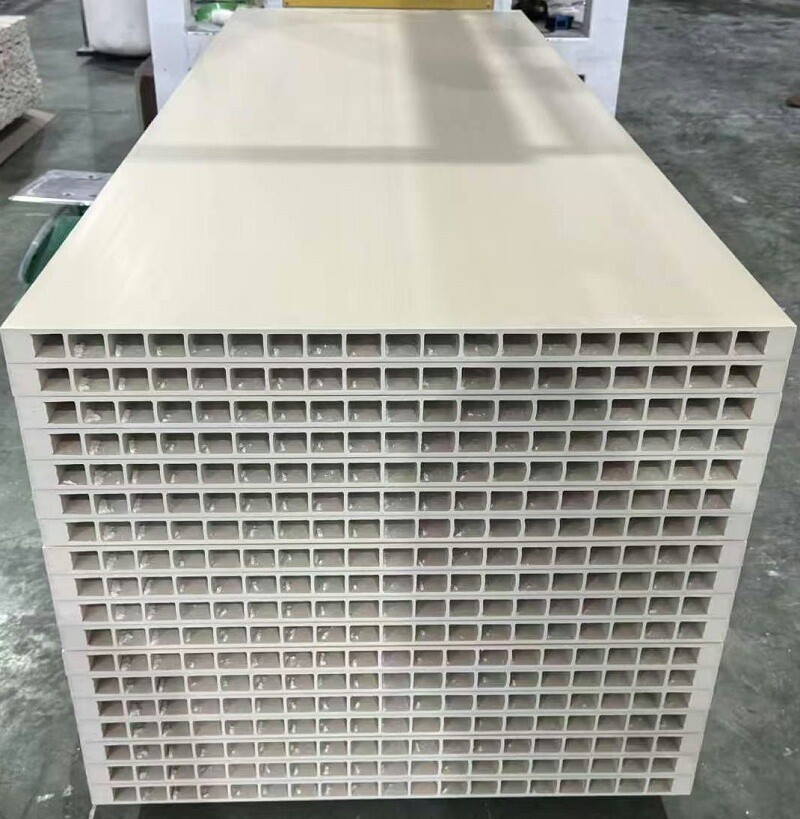
Large-scale production of modern WPC flooring relies heavily on the synergistic effect of specialized additives. Four major additives — WPC flooring stabilizers, foaming agents, expandable microspheres and lubricants — run through the entire production process including material mixing, plasticization, foaming, extrusion and shaping. They directly determine the surface appearance, internal cell structure, dimensional stability and production yield of WPC flooring. Jabetter has long been engaged in the wood-plastic additives industry. We develop tailor-made additives targeted at the working conditions of WPC flooring production. Our products are compatible with ordinary extrusion lines, high-speed extrusion lines and recycled material modification lines, suitable for mass production of WPC flooring for both residential and commercial scenarios.
As a core guarantee for board processing, WPC flooring stabilizers protect PVC resin from thermal and shear degradation during production, effectively preventing yellowing, blackening and edge carbonization on flooring surfaces. Designed to match the temperature range of foaming processes, they ensure smooth follow-up foaming operations. These stabilizers can neutralize acidic substances generated by material decomposition, reducing mold corrosion and factory maintenance costs. Independently developed by Jabetter, our stabilizer formulas comply with environmental production standards and contain no heavy metals, meeting the requirements for export-grade flooring. They work synergistically with fillers to improve the compatibility of wood powder, calcium powder and resin. With optimized formula structures, our stabilizers also deliver auxiliary material stabilization performance. Combined with WPC flooring lubricants, they improve melt status and adapt to the production of WPC flooring of different thickness specifications.
WPC flooring foaming agents are key raw materials for manufacturing lightweight boards. They generate gas in a controllable manner when heated, adjusting the overall density of WPC flooring and cutting down raw material costs. The gas generation rate of foaming agents must match the temperature resistance range of stabilizers; mismatched temperatures will lead to foaming failure and surface cracking. We offer general-purpose and modified foaming agents to suit materials with different filler ratios. Jabetter optimizes the decomposition performance of foaming agents to achieve steady and uniform gas release, avoiding bulging and hollow defects caused by instant excessive gas production. Featuring excellent compatibility, our foaming agents work with expandable microspheres to refine the micropore structure. We adjust the activity of foaming agents according to production equipment parameters, and cooperate with lubricants to enhance gas dispersion. This ensures uniform density of finished flooring and better flatness for installation.
As high-precision foaming additives, expandable microspheres make up for the deficiencies of using foaming agents alone. When heated, they expand to form independent closed micropores, which improve the sound insulation, shock absorption and heat insulation performance of WPC flooring. With stable mechanical properties, the microspheres are resistant to damage and cell collapse under extrusion shear force, maintaining the integrity of the internal structure of flooring boards. When used together with stabilizers, they lock the shape of formed micropores and prevent post-production shrinkage, warping and deformation of WPC flooring. Jabetter implements strict particle size control to guarantee consistent particle size across batches. Our expandable microspheres adapt to low-temperature energy-saving foaming processes, and will not agglomerate in materials. They are ideal for WPC flooring formulas with high content of wood powder and fillers, as well as customized production of lightweight WPC flooring for whole-house decoration.
Lubricants optimize material plasticization and demolding efficiency, featuring both internal and external lubrication effects. Internal lubrication boosts the blending of resin and wood powder, while external lubrication isolates materials from screws and molds to reduce material adhesion and accumulation. They lower the load of extrusion equipment and cut energy consumption. Combined with stabilizers, lubricants prevent additive precipitation and eliminate white oil spots on flooring surfaces. Jabetter formulates composite lubricants applicable to the full range of high and low processing temperatures. They facilitate even dispersion of foaming agents and expandable microspheres, simplifying the material mixing process. We adjust the dosage of lubricants as required to adapt to production with virgin materials and recycled materials. The products improve surface smoothness of WPC flooring and reduce scratches and pockmarks.
Jabetter focuses on the supporting additives sector for WPC flooring. We provide integrated solutions combining stabilizers, foaming agents, expandable microspheres and lubricants. Our professional team can conduct on-site commissioning and ratio adjustment based on factory working conditions, and avoid production downtime caused by incompatibility between different additives. We maintain strict quality control to ensure stable and consistent performance of additives in every batch. Free sample service is available, and we customize exclusive additive solutions according to different raw materials. Committed to reducing the defective product rate for manufacturers, Jabetter leverages our mature additive system to support the large-scale production of high-quality WPC flooring across the industry.
☁网络:http://www.jbtpvc.com/
☎WhatsApp:008618963029813
✉电子邮件:info@Jabetter.com
#PVC_stabilizer #PVC_foaming_agent#PVC_processing_aid#WPC_additive#PVC_lubricant#Chemicals#Chemical_auxiliary_agent#PVC#PVC_additives
#PVC_stabilizer #PVC_foaming_agent#PVC_processing_aid#WPC_additive#PVC_lubricant#Chemicals#Chemical_auxiliary_agent#PVC#PVC_additives
